Identity
“Her last name, his first name, I solemnly / See what they called me—and who I Am—In a dichotomy.”
I was given the name Maynard Terrell Woods, But you RARELY HEARD me called MYSELF that…
It started with T-Swift.
Terrell (middle name in the beginning) informed my first name in this business of music, back in 1987. I was young, hungry, quick-tongued, and already in love with the idea of building something out of nothing but my voice, as an emcee. About 11 years in, I outgrew that name and became someone new — someone louder, harder, even faster, and a lot more armored: Carnage The Executioner.
“emerged the image that every verse was written with / intent to show ‘carnage’ is on my birth certificate.”
Carnage was who I needed to be — for a while.
I built that name to live up to, and for almost 25 years, I did. I took the stage with an intensity that left an impression. I wrote to most-often assert dominance, and rarely to connect. Carnage The Executioner got me noticed, and got me on stages across the country and around the world. Carnage earned me a reputation as one of the most skilled rhyme-writing human beat boxers in the game — the kind of artist other musicians would call their favorite rapper's favorite rapper.
But here's what I didn't understand back then: Carnage wasn't just a stage name. He was a mask. And I was wearing him everywhere — on stage and off.
“am I clashin’ with that if i’m bad in the tracks? / you cannot master your past, if you pass with a mask.”
It took me a long time to see it.
Somewhere around 2013, I started asking harder questions about where "Carnage" actually came from — and why I'd built him the way I did. It would take me another 8 years to go even deeper, and explore the origin story. What I found wasn't flattering. I'd spent decades using a hardened, unbothered character to protect a much softer, more insecure version of myself — a version shaped by growing up without the security every kid deserves: a father who wasn't there, a mother who was harder in true life than my character, and a home that wasn't safe. Carnage let me survive that. He gave me armor when I needed it.
But armor you never take off eventually becomes a cage.
“Being harder is cyclical; saw myself / on a stage where a crack in my armor was visible.”
So I made a change.
By 2021, I decided I would not get rid of Carnage — that name, and everything I built with it, will always be part of my story. But I added something new: TERRELL X. Not a replacement, but a commitment — to growth, to honesty, and to showing people the version of me that Carnage had been covering up.
Not long after, I took it a step further and legally changed my name to Terrell X'avion. I let go of the first name, Maynard, that was tied to an absent father. I let go of the last name, Woods, tied to a painful childhood with an abusive mother. I claimed my middle name of Terrell (“…the only part that belongs to me!”) as my first name. Then I chose the new last name of ‘X'avion’ on purpose — it stands for ‘intelligent spiritual warrior and survivor’; someone still becoming, with the ‘X’ doubling as a symbol of possessing more potential than I've tapped; a self still ascending toward its best version. Self-motivated and stronger than ever before, my refined identity is both a name and an empowering direction I'm voluntarily walking in.
“with the ‘x—unknown potential,’ lead with a need / to succeed and achieve before I was even conceived.”
Today, both live in me — and I've made peace with that.
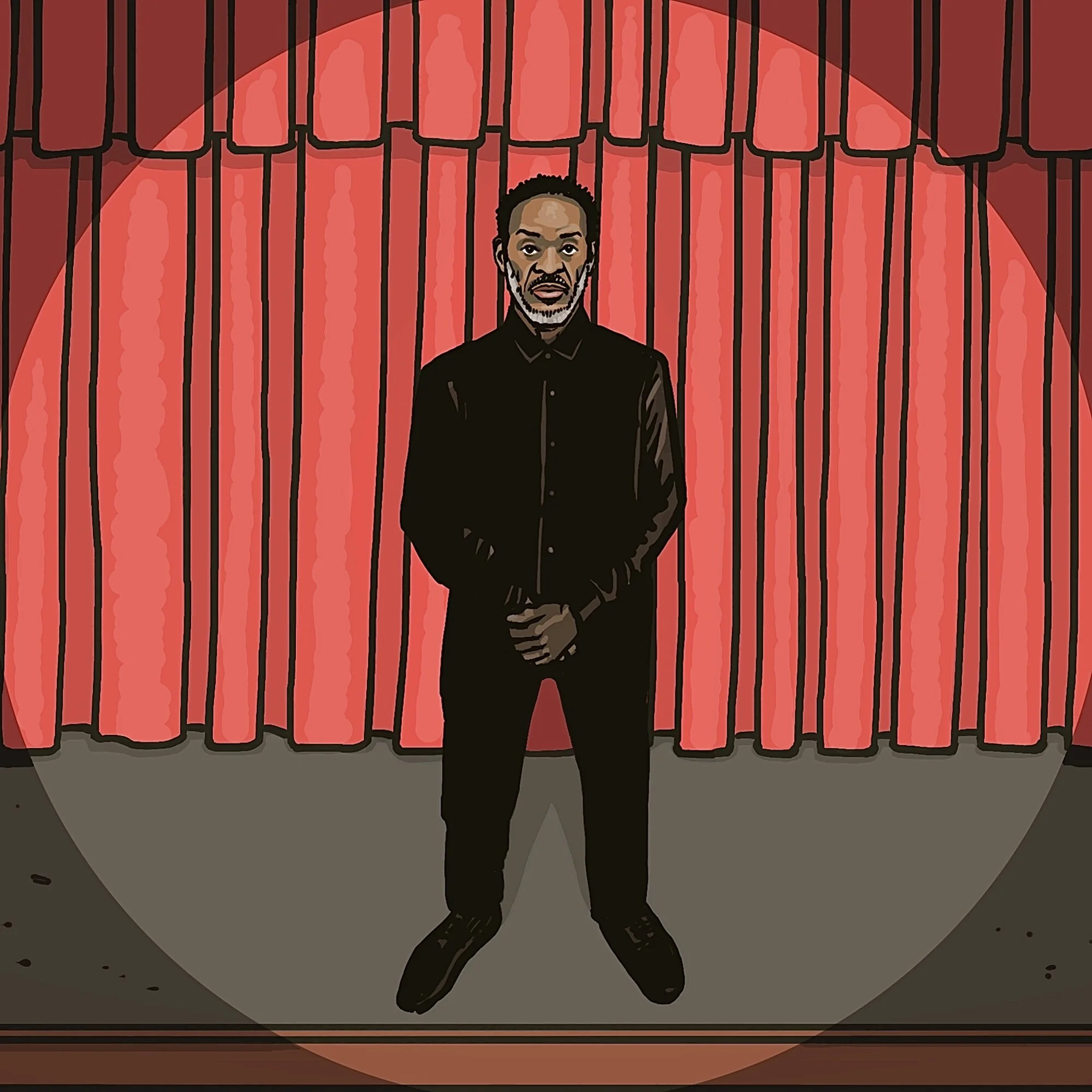
Carnage The Executioner still shows up when it's time to boldly perform, produce, and put on a show that leaves people talking. Terrell X is who shows up in classrooms, workshops, and rooms full of young people trying to figure out who they're going to become. I don't hide either one anymore. I've learned that the full story — the mask and the person underneath it — is more powerful than either half alone. Carnage’s artistry is the feature on the show boat. Terrell X is the captain of the ship.
“hip hop arose, although i’m carnage— / A climb started for me to reach the prime target.”
That's why I do this work now.
I spent most of my life turning pain into performance. Today, I get to turn that same story into something young people can actually use — proof that you can outgrow the identity you built to survive, that changing your name (or your mind, or your whole direction) isn't weakness, it's growth. Every time I step into a school or a workshop (and now even on a stage), that's the real lesson underneath the beat boxing or rapping: your story isn't finished, and you get to decide what happens next.
I know that better than almost anyone. I've done it myself — twice.
— Terrell X'avion